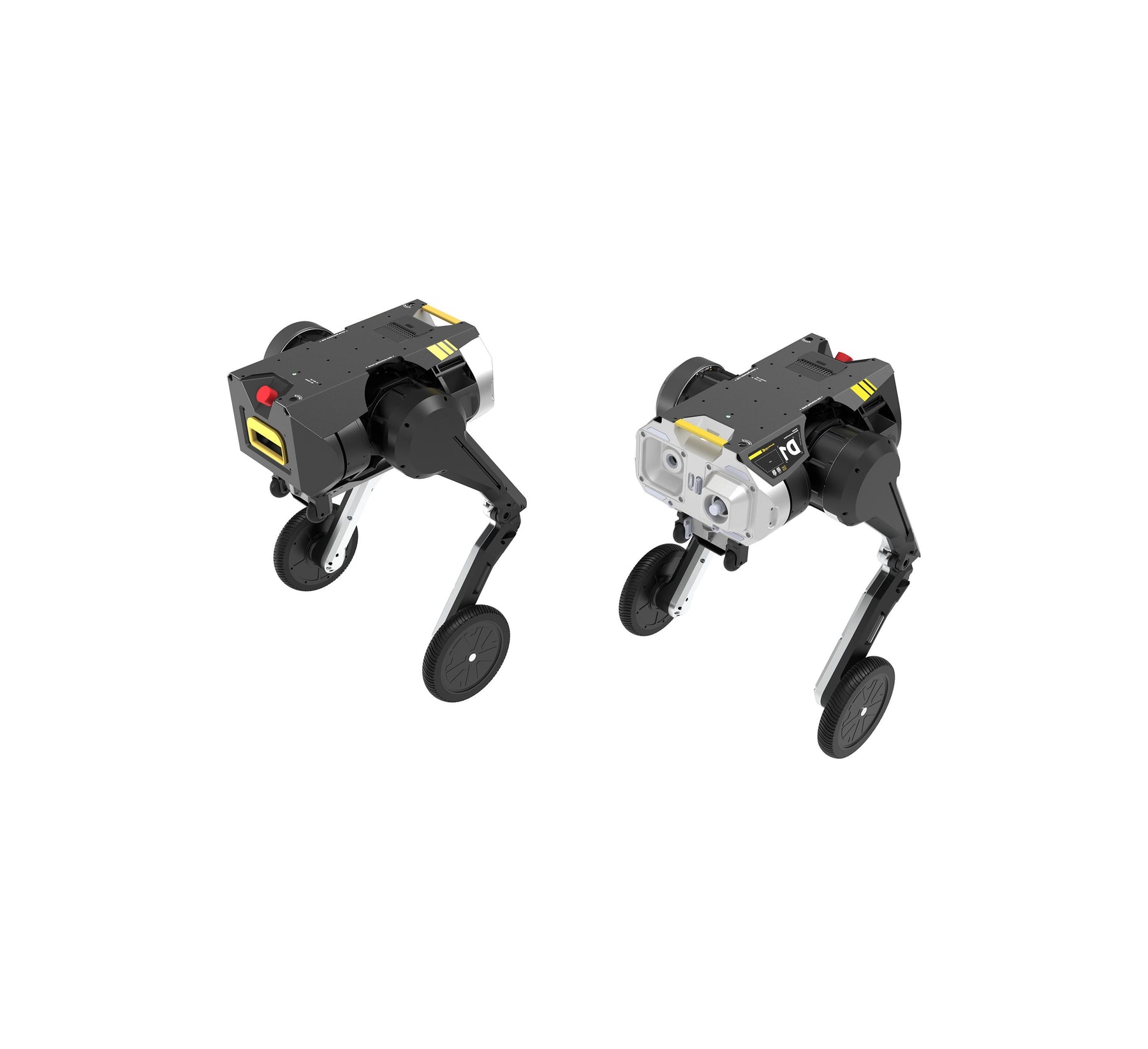
D1 Robot procurement planning requires European and global buyers to evaluate hardware configuration, software access, deployment costs, and long-term research requirements. The D1 robot range supports academic and industrial robotics programs with modular configurations, sensor options, and development interfaces. Buyers should estimate budgets across purchase, integration, and maintenance stages, with many research projects allocating 20%–35% of total funding to software development and system integration after hardware acquisition.
Research organizations purchasing robotic platforms in 2026 are increasingly focused on practical deployment rather than simple hardware comparison. Universities, laboratories, and industrial R&D teams usually evaluate whether a robot can support multiple research topics over 3–5 years, including locomotion, perception, AI control, and human-robot interaction.
The procurement process begins with defining research goals. A robotics laboratory studying reinforcement learning may require high-frequency control access and simulation compatibility, while a computer vision group may prioritize camera systems, computing capability, and data collection stability.
“A suitable research robot should match the laboratory workflow, software environment, and future project plans.”
For buyers evaluating the DDT D1 robot range, configuration selection should consider several technical factors:
| Evaluation Area | Typical Requirements |
|---|---|
| Motion system | Stable walking, repeatable movement, flexible control |
| Computing | Onboard processing, external GPU connection |
| Sensors | RGB cameras, depth sensors, IMU, optional modules |
| Software | SDK access, API availability, ROS compatibility |
| Maintenance | Spare parts, training, technical support |
The selected configuration affects both research efficiency and total ownership cost. A basic research setup may meet teaching and algorithm development needs, while advanced laboratories may require additional sensors and computing resources. In many robotics programs, hardware accounts for approximately 60%–70% of initial investment, while software, integration, and supporting equipment account for the remaining budget.
Software compatibility has become one of the main purchasing considerations because research teams often modify algorithms after deployment. A platform that provides access to control interfaces allows researchers to test new navigation methods, reinforcement learning policies, and perception models without replacing the complete system.
European research institutions commonly use frameworks such as ROS-based environments for robotics development. A robot that can connect with existing simulation tools reduces development time and allows teams to reuse previous software components. For example, laboratories may spend 3–6 months preparing a robotics research pipeline, and open development interfaces can shorten this preparation period by approximately 20%–40% depending on project complexity.
Sensor configuration is another important part of procurement planning. Different research fields require different data sources.
| Research Application | Common Hardware Requirements |
|---|---|
| Autonomous navigation | LiDAR, depth camera, localization sensors |
| AI perception | High-resolution cameras, GPU processing |
| Motion control | Joint feedback, precise motor control |
| Human interaction | Audio, vision, safety monitoring |
| Robotics education | Standard sensors and development tools |
A laboratory purchasing a robot for several research groups should consider modular expansion. A platform that supports additional sensors and software updates can remain useful as research directions change. Many university robotics programs operate equipment for more than 5 years, making upgrade capability an important factor during purchasing evaluation.
Budget planning should include expenses beyond the robot itself. International buyers often need to consider transportation, customs procedures, installation, training, and laboratory preparation.
| Cost Category | Estimated Budget Share |
|---|---|
| Robot platform | 60%–70% |
| Computing equipment | 10%–20% |
| Software development | 10%–15% |
| Training and maintenance | 5%–10% |
For European buyers, procurement procedures may require technical documents, safety information, supplier verification, and internal approval processes. Public universities and research institutes often compare several suppliers before purchase, with evaluation periods commonly lasting 2–6 months.
“Procurement documents should describe research goals, expected applications, technical requirements, and service conditions.”
Supplier support is another factor affecting long-term operation. Research robots are frequently used for repeated testing, algorithm updates, and student projects. Technical response speed, documentation quality, and availability of replacement components can influence laboratory productivity.
Global buyers should also consider regional service coverage. A robot installed in Europe, North America, or other international locations may require remote support, software updates, and replacement part availability. A structured service agreement can reduce downtime during important research periods.
Deployment planning should begin before the robot arrives. Laboratories need suitable indoor space, network access, safety zones, and trained operators. A typical preparation period may require 4–12 weeks, depending on facility conditions and research complexity.
A practical procurement timeline can be organized as follows:
| Stage | Estimated Period | Main Tasks |
|---|---|---|
| Requirement definition | 1–3 months | Research goals, specifications, budget |
| Supplier evaluation | 1–2 months | Technical comparison and quotations |
| Delivery preparation | 1–3 months | Logistics, installation planning |
| System integration | 1–3 months | Software setup and testing |
| Research operation | Long term | Data collection and algorithm development |
The research environment also affects configuration decisions. A university robotics department may use the platform for hundreds of students and multiple research projects each year, while an industrial laboratory may focus on specific automation challenges. The same robot model can require different setups depending on expected workload.
Data management should also be included in procurement planning. Modern robotics projects can generate large volumes of sensor data. A single camera system operating at 30 frames per second can produce thousands of images within minutes, requiring suitable storage and processing systems.
In AI robotics research, computing resources often determine how quickly new models can be tested. Some laboratories combine onboard processors with external workstations equipped with GPUs. This approach allows researchers to balance real-time operation and advanced model training.
A flexible hardware and software architecture helps extend the useful period of a research robot beyond the first project cycle. Platforms that support software updates, additional sensors, and external computing can continue serving new research topics after the original deployment.
For industrial buyers, procurement decisions may include production validation, automation testing, and workforce training. Companies often begin with a research platform before moving toward larger-scale robotic deployment. A research robot can provide early testing capability before committing to more expensive automation systems.
International cooperation is another consideration for research institutions. Shared platforms allow teams from different universities and companies to reproduce results, compare algorithms, and develop common software tools. Standardized interfaces make collaboration easier across different locations.
When comparing robotic platforms, buyers should use measurable criteria rather than only product descriptions.
| Category | Example Measurement |
|---|---|
| Mobility | Walking stability, speed, repeatability |
| Computing | Processing capability, expansion options |
| Software | API access, development support |
| Reliability | Operating hours, maintenance requirements |
| Cost | Purchase and long-term operation expenses |
A structured procurement approach helps European and global buyers select a robot that fits current research tasks while remaining useful for future projects. The D1 Robot platform evaluation should include technical capability, software flexibility, service support, and total ownership planning to create a reliable foundation for robotics research and development.