Fitness equipment samples should be compared by model, intended user, operating environment, function, construction, safety features, and supporting evidence. A polished demonstration unit may differ from routine production, and a basic motion check cannot establish structural durability or regulatory conformity. Before selecting a supplier, define the sample review, specialist tests, destination requirements, and production controls that will link the approved unit to later shipments.
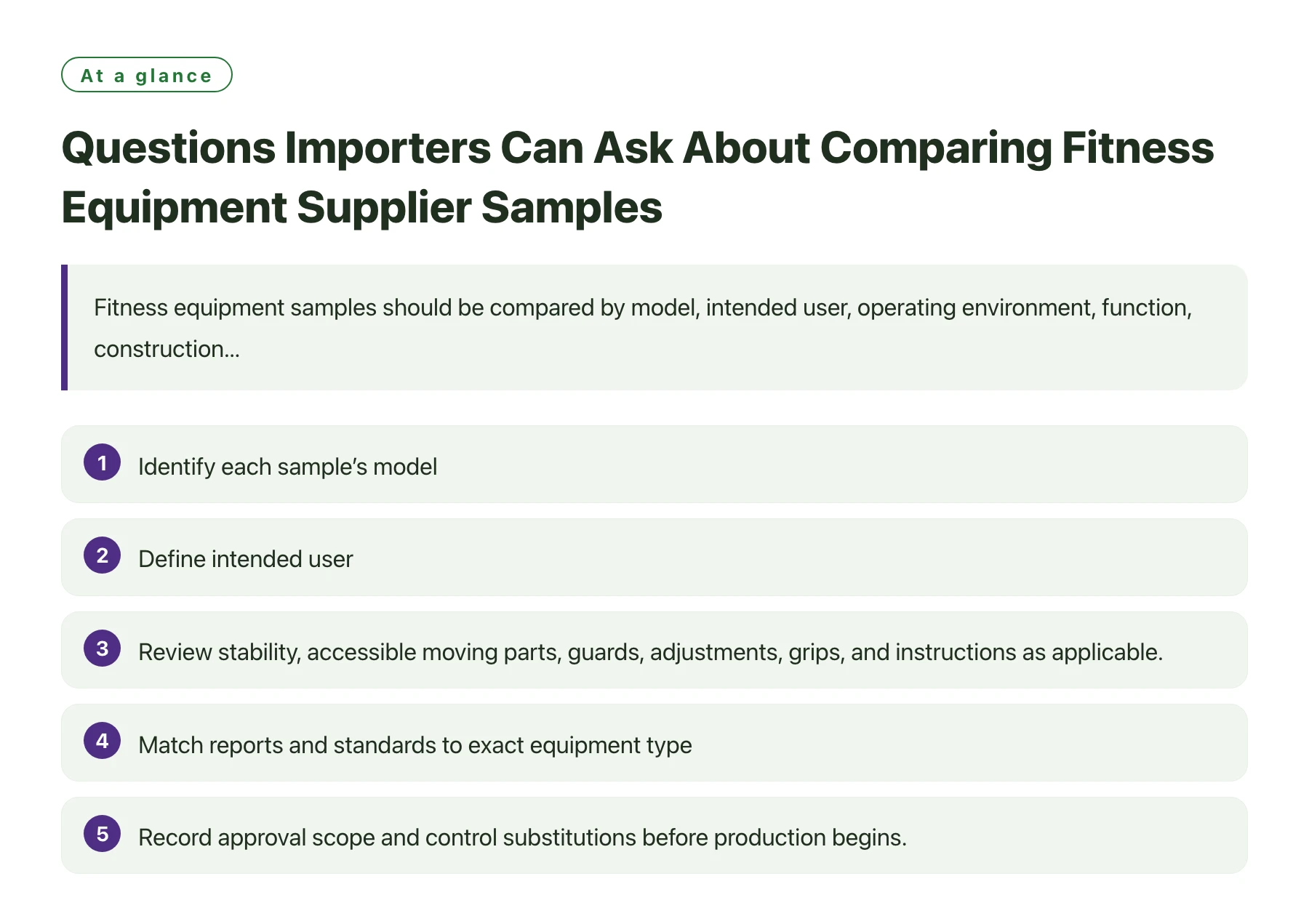
Key takeawaysIdentify each sample’s model, factory, revision, materials, and production status. · Define intended user, indoor or outdoor setting, load, motion, and operating conditions. · Review stability, accessible moving parts, guards, adjustments, grips, and instructions as applicable. · Match reports and standards to exact equipment type, design, and destination market. · Record approval scope and control substitutions before production begins.
Use one review matrix for every candidate and assign safety questions to qualified reviewers.
1. What equipment and intended use are being compared?
Describe whether the product is a treadmill, bike, strength station, bench, rack, rower, accessory, or another item. Record user group, indoor or outdoor setting, expected frequency, installation conditions, electrical supply if applicable, and commercial or home use. Identify the operating load and any special users or accessibility requirements. Two machines that look similar may have different risks and intended applications.
For U.S. indoor fitness equipment in the scope of ASTM F2276-23, the standard specifies design and construction parameters for matters such as stability, support, accessible moving parts, guarding, adjustment and locking means, and user information. Check whether the standard applies to the specific product and market; it does not address every safety concern or replace a qualified regulatory review. [1]
2. How can each sample be tied to production?
Label every unit with supplier, manufacturer, model, factory, date, revision, materials, components, and sample status. Ask whether it is an engineering prototype, showroom unit, golden sample, or production-intent unit. Photograph serial plates, labels, and key features. Record any special parts, reinforced welds, upgraded fasteners, or hand adjustments that may not appear in mass production.
Request a bill of materials or controlled product configuration for each candidate. Confirm who made the sample, where it was assembled, and which components were sourced from subcontractors. If the supplier uses a display model that cannot be produced at the quoted price or lead time, document the difference before treating it as an acceptable reference.
3. Which function and fit checks are appropriate?
Create a test sequence for the intended operation: assembly, adjustments, start and stop, motion range, resistance changes, folding or locking, display or control functions, and accessory fit. State setup, duration, repetitions, user action, and expected response. Record unusual noise, looseness, binding, instability, or inconsistent resistance with the model and test condition.
Measure dimensions, clearance, frame alignment, weld appearance, coating, fastener access, and contact surfaces against drawings and limits. Confirm the sample is set up on a representative surface and anchored as required. A short demonstration can reveal a fit issue but cannot establish long-term endurance, load capacity, or performance under every user condition.
4. What safety features and hazards need review?
Ask a qualified product-safety or engineering reviewer to identify hazards relevant to the equipment: tipping, pinch or shear points, moving parts, unstable support, cable or belt failure, sharp edges, unintended movement, electrical risk, and foreseeable misuse. Check accessible guards, spacing, locks, grips, supports, warning labels, and user instructions where applicable. Use tests and criteria appropriate to the equipment category.
Do not ask buyers to perform high-load or destructive tests without proper fixtures and authorization. Identify what needs a laboratory, technical specialist, or certified test method. If the destination has mandatory rules, the importer’s compliance owner should determine the applicable requirements. A safety claim from a supplier or a sample that “feels sturdy” is not sufficient evidence by itself.
5. Which reports and documents match the sample?
Review test reports, material certificates, component documentation, electrical records, manuals, assembly instructions, maintenance schedules, warnings, and warranty terms as relevant. Match model, revision, factory, sample configuration, date, method, results, and test scope. Ask whether the report covers the exact resistance system, frame, motor, control board, or attachment supplied in the quote.
Check who issued the report and whether their competence or accreditation is required by the selected scheme. A report for a different version may not cover a changed component. Keep the complete file and note what remains supplier-stated, pending, expired, or outside scope. Assign a qualified owner to interpret regulatory or specialized test results before commercial approval.
6. How should competing samples be scored?
Compare product configuration, fit, function, finish, safety evidence, documentation, serviceability, spare parts, warranty, packaging, production capacity, and quote assumptions. Use the same review conditions and rating definitions for every candidate. Separate mandatory requirements from preferences, and do not allow a low price or attractive display model to offset a missing critical safety item.
Record strengths, gaps, additional tests, cost, lead time, and owner for each candidate. Ask suppliers to clarify why models differ and whether a feature changes tooling or maintenance. If a sample cannot be evaluated because a report or accessory is missing, mark the comparison pending rather than awarding a score based on assumption.
7. What should an approval reference include?
After selection, document the approved model, bill of materials, design revision, factory, sample identity, functional checks, test evidence, labels, manuals, finish, and packaging. State which characteristics were approved and which require separate verification. Retain photos, measurements, and the physical reference under conditions that will not damage or alter it.
Define how production goods will be checked against the sample and which features require an objective measurement or test. The supplier should not treat approval of color or appearance as approval of safety or regulatory compliance. Require a new review when frame material, weld design, motor, control system, grip, cable, supplier, or manufacturing site changes.
8. Connect sample selection to sourcing and delivery
Before order release, confirm quotation, model configuration, order quantity, delivery schedule, inspection plan, test requirements, spare parts, manuals, packaging, and market documents all match the approved reference. Assign owners for production monitoring, final inspection, and shipment release. Keep the shipment traceable by serial or lot where provided.
Buyers comparing JS Sourcing fitness equipment sourcing can request supplier evidence and a sample-control workflow, then use the same matrix to compare alternatives. At receipt, inspect identification, accessories, visible damage, instructions, and open test conditions before equipment is installed or placed into service.
Sources
Frequently asked questions
Is one working sample enough to approve gym equipment?
It may support a limited review, but approval scope should name the sample configuration, tests performed, evidence still required, and production controls needed for delivered units.
Can a supplier sample prove equipment is safe?
Not by appearance or a short demonstration. Safety review may require product-specific risk assessment, test methods, technical expertise, and destination-market compliance evidence.
What should be compared between fitness equipment samples?
Compare model and configuration, dimensions, materials, function, safety features, instructions, reports, factory, sample status, packaging, warranty, and order assumptions.
When should a new sample be requested?
Request one when a change to frame, moving parts, motor, controls, resistance system, materials, factory, or intended use could affect fit, function, safety, or compliance.